Sony RX10 Mark IV Bridge Camera
2019 © Thomas Gade| Index | 1. Zeiss Megazoom + Digital Zoom |
| 2. Autofocus, Shooting with a Tripod, Macro / Plant Photography | |
| 3. Power Supply, Exposure Times, Heat Haze, JPG or RAW? Wildlife Photography | |
| 4. Image Quality at Low and High ISO Settings, Evaluation / Photos from Berlin | |
| 5. Boat Photography |
Power Supply
Some reviews criticize the battery life of the Sony RX10 IV, claiming that the battery is exhausted after about 400 shots. During our test, however, the battery still had charge remaining after more than 660 photographs and several minutes of video recording. The built-in flash was not used, though. On several occasions, a powerful Metz flash with its own batteries was employed, so it did not draw power from the camera battery.Another frequently mentioned criticism is the lack of a separate battery charger in the package. The battery is charged inside the camera via a USB cable using the supplied AC adapter, which is similar to those included with many smartphones. In my opinion, this criticism is unnecessary because third-party manufacturers offer external chargers, often including two spare batteries, for only €20–30.
Buying one is not even necessary if you already own other mobile charging solutions for smartphones.
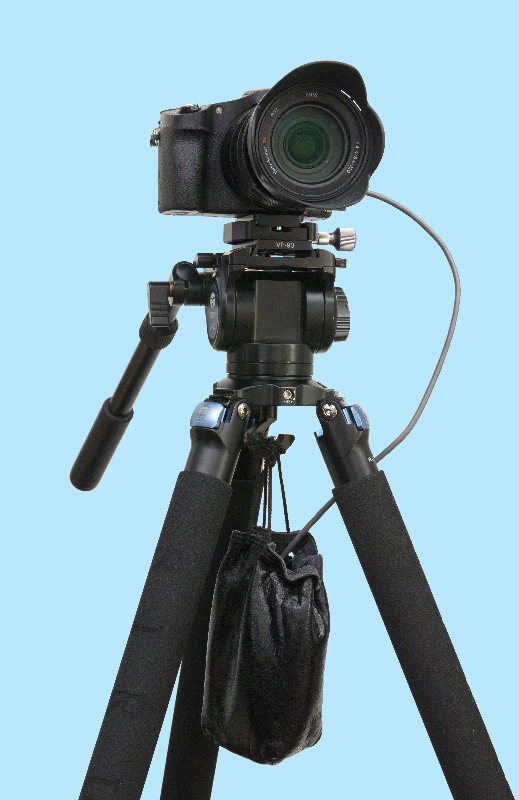
No more worries about battery power. The Sony RX10 IV is supplied with power from a power bank stored in a small pouch hanging from the tripod hook.
The camera can also be charged in a car using an inexpensive USB adapter (€5–10) for the cigarette lighter socket. Such an adapter is useful anyway for charging a smartphone. Even more practical is a modern power bank, typically about the size of a 2.5-inch external hard drive, costing between €20 and €50. It stores enough energy to recharge both smartphones and the camera several times, making it an ideal portable power source.
Many tripods feature a hook beneath the tripod head from which a small bag containing the power bank can be suspended. The Sony RX10 IV can then be connected to it with a USB cable, allowing the camera to draw more power than it is likely to consume, even during extended shooting sessions. Whether continuously powering the camera from a power bank shortens the life of the inexpensive battery is difficult to say. Opinions differ among smartphone users. Even in the worst case, replacing the Sony RX10 IV battery is relatively inexpensive.
Control Rings on the Sony RX10 IV Lens
The Sony RX10 IV zoom lens features three control rings: one for aperture, one for focal length, and one for manual focusing.Although they resemble traditional mechanical control rings, all three are actually electronic. Only the aperture ring provides the familiar click stops that make it feel like a conventional camera lens.
Using these electronic rings takes some getting used to because the camera responds with a slight delay. On the other hand, the menu allows you to reverse the focus direction or adjust the zoom speed to suit your personal preferences.
In practice, these rings are often unnecessary. Zooming is usually performed with the lever surrounding the shutter release, while focusing by simply tapping the desired subject on the touchscreen is both easier and more reliable than turning the manual focus ring.
Exposure Times
In manual mode, shutter speeds can be selected from 30 seconds down to 1/32,000 s. The camera features two different shutter systems. The mechanical shutter provides a minimum exposure time of 1/2,000 s at apertures between f/8 and f/16, while at larger apertures the fastest available shutter speed is 1/1,000 s.Extremely Fast Flash Synchronization
These are also the maximum flash synchronization speeds. During testing with a Metz hot-shoe flash, no problems occurred. At f/8, the entire image was evenly illuminated even at a shutter speed of 1/2000 s.This is a major advantage of the Sony RX10 IV because it allows deep shadows to be filled with flash in bright daylight while still benefiting from very short exposure times. An impressive achievement.
The electronic shutter extends the available shutter speeds to 1/32,000 s at all aperture settings. Although the flash still fires at these extremely short shutter speeds, it has no effect on the exposure.
Video
The Sony RX10 IV was designed not only as a still camera but also as an outstanding video camera capable of recording in 4K resolution. A single 4K frame contains approximately eight million pixels. Four recording formats are available. In Full HD, frame rates of up to 1,000 frames per second can be selected for spectacular slow-motion videos. As this review focuses primarily on photography, only a brief mention of the video features is appropriate here. A search for "Sony RX10 IV slow motion" on YouTube will reveal numerous impressive examples that demonstrate the camera's excellent high-speed video capabilities.Reducing Atmospheric Heat Haze
At wide-angle and short telephoto focal lengths, image distortion caused by atmospheric turbulence is rarely a problem. However, from about 200 mm (full-frame equivalent) onward, distant subjects often lose fine detail. Straight edges appear wavy, and objects become distorted by rising warm air. During city sightseeing, heat shimmering above streets and buildings noticeably reduces image quality. The stronger the telephoto effect, the more pronounced this problem becomes.For static subjects affected by atmospheric turbulence, image quality can be improved by stacking several identical photographs taken from exactly the same position. The camera should be mounted on a tripod to ensure perfect alignment of all frames.
Successful stacking requires at least four identical images, although a dozen or more produces noticeably better results. Using the Mean blending mode in Adobe Photoshop significantly reduces atmospheric distortion. Even better results can be achieved with the free astronomy program AutoStakkert! 3, because it allows you to specify what percentage of the images should be included in the stack. The software automatically selects only the sharpest frames for processing. It accepts not only image sequences but also video files. (See c't Fotografie Summer Special 2019.)
The Sony RX10 IV is exceptionally well suited to this technique. It can capture up to 24 full-resolution images (20 MP) per second and also records 4K video at 3840 × 2160 pixels (8.3 MP). Switching from single-shot mode to continuous shooting through the camera menu may be too slow for spontaneous situations. If eight megapixels are sufficient, however, simply recording a short 4K video is often the easier solution.
One or two seconds of video already provide enough frames for stacking. AutoStakkert! 3 can process 4K clips, although Sony's video format must first be converted into another format. For our tests, the clips were converted to AVI using the Xvid codec before being processed without any problems.

Single frame from a series of photographs of Berlin TV Tower.
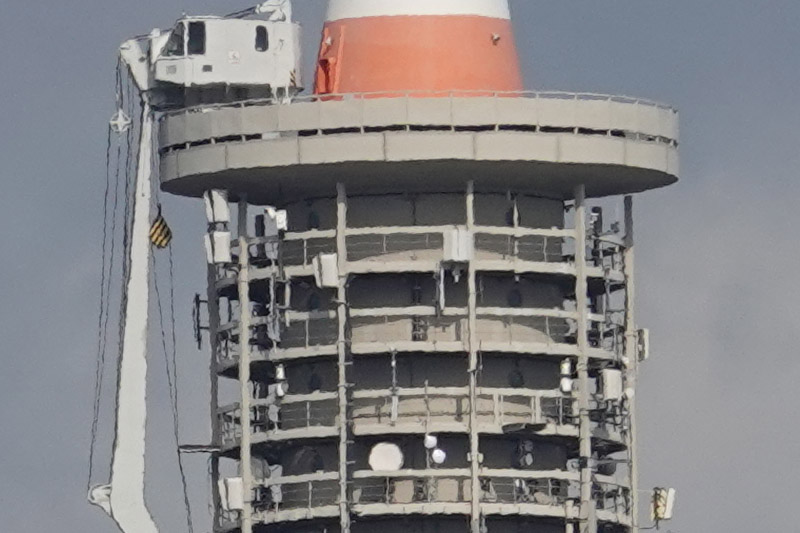
Crop showing image details distorted by atmospheric heat haze.

Crop after reducing atmospheric distortion by stacking multiple photographs.
Reducing atmospheric heat haze. The Berlin TV Tower was photographed 42 times from a fixed tripod position using the maximum focal length of 220 mm (600 mm full-frame equivalent). Fifty percent of the images were stacked with AutoStakkert! 3. Wavelet sharpening was performed in RegiStax using the settings Linear, Gaussian, and Use Linked Wavelets. All parameters remained unchanged except for the sharpening values in Layers 2 and 3, which were increased from 0.100 to 0.160. Finally, the tonal values were adjusted in Photoshop and a moderate High Pass sharpening filter was applied.
JPG or RAW?
Photos are saved either as JPG files or ARW files (Sony's RAW format). During the first days of the test phase, the camera was set to record every image in both formats, allowing direct comparison between the JPG results and the converted RAW files. At the highest quality setting, the Sony RX10 IV produces such excellent JPG files that even RAW conversion with carefully optimized settings offers practically no significant advantages.Even moiré effects in the diagonal feather patterns of birds are handled very well by the camera's internal JPG processing, while achieving similar results from RAW files requires finding the appropriate settings manually in the RAW converter.
There are, however, some exceptions, especially when preserving highlight detail (such as bright clouds or white fabrics) or shadow information is important. In these situations, the RAW format provides more flexibility for adjusting tonal values during post-processing.
During the second half of the test period, only JPG files were recorded, and I never missed having the RAW data available.
Sample Images: Wildlife Photography
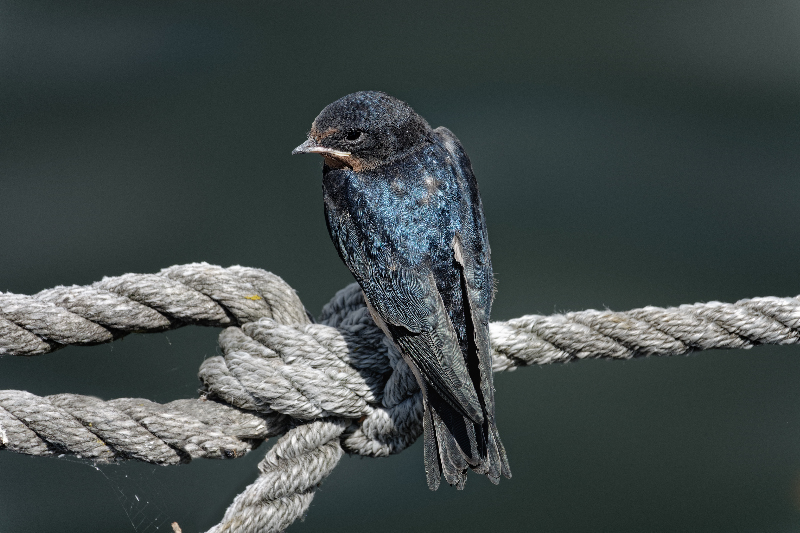
Barn swallow on a blade of grass. Settings: f/4, ISO 100, 1/500 s, 208 mm (567 mm full-frame equivalent)
The image is extremely sharp and can be printed as a poster.

Crop (800 × 533 pixels) from the photograph.
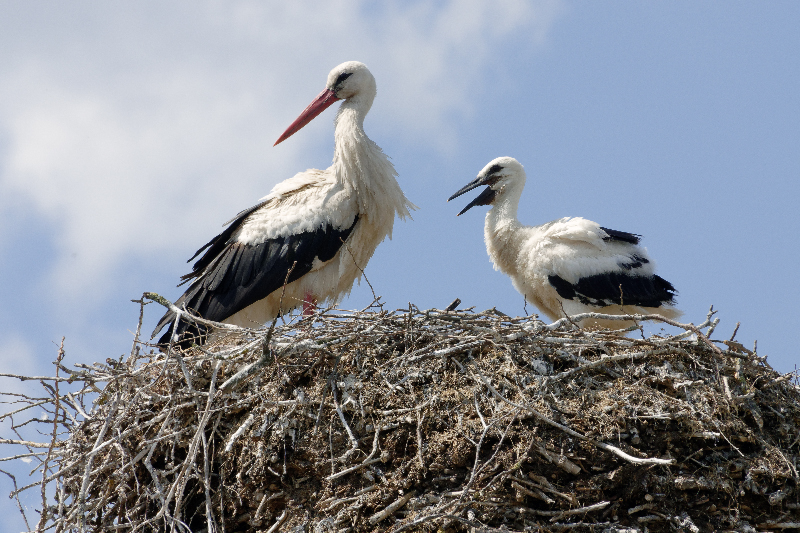
Storks in a nest in Linum. Settings: f/8, ISO 200, 1/400 s, 220 mm (600 mm full-frame equivalent)

Baboon at Berlin Zoo.
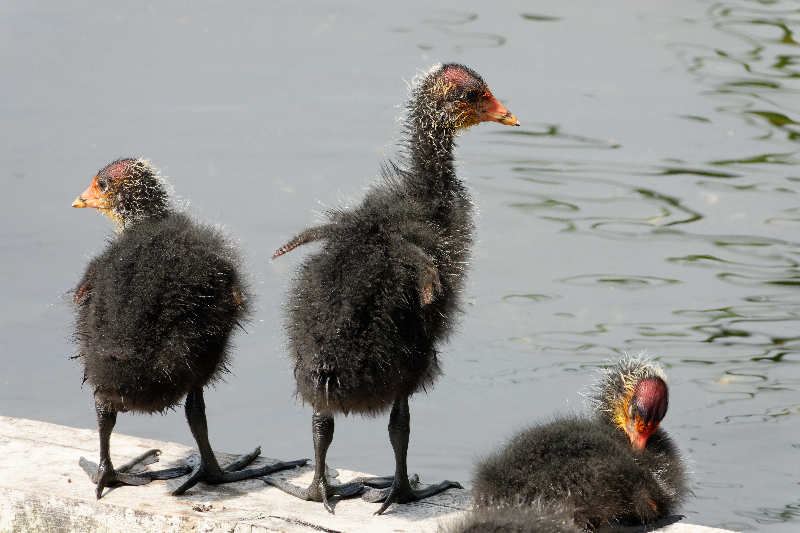
Berlin. Coot chick at Lake Tegel. Settings: f/8, ISO 200, 1/160 s, 220 mm (600 mm full-frame equivalent)
Cranes – Migratory Birds in Autumn
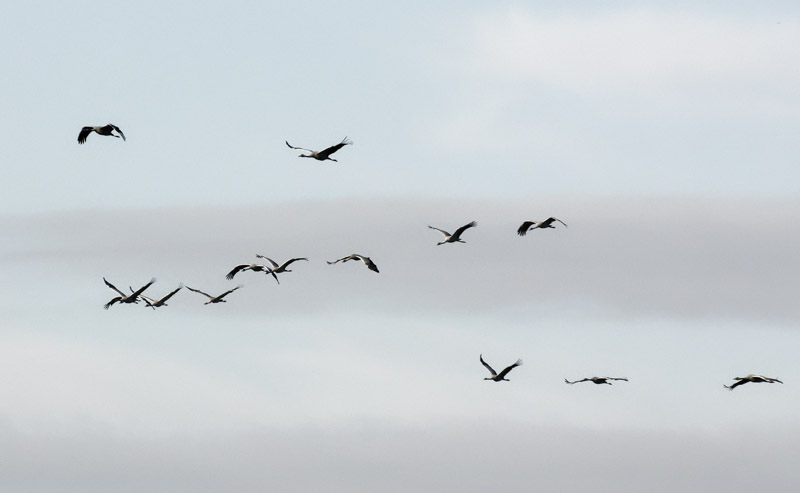
Cranes in flight. Scenes like this confuse the autofocus systems of many cameras because they cannot determine which part of the image should be in focus. The Sony RX10 IV is no exception. Therefore, many photographs must be taken to obtain a few successful images.
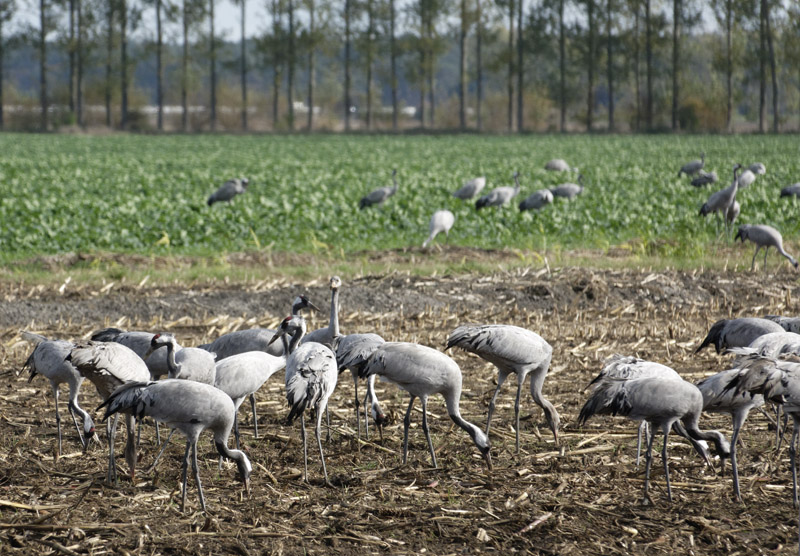
October 2019. Brandenburg, Germany. Cranes on a harvested corn field between Linum and Kuhhorst. They feed to build up energy reserves for their long migration south. The Sony RX10 IV handles this subject surprisingly well. Professional wildlife photographers using expensive equipment may expect higher resolution, but the compact Sony delivers outstanding results thanks to its powerful telephoto reach and performs better than many setups used by demanding amateur photographers.
| Index | 1. Zeiss Megazoom + Digital Zoom |
| 2. Autofocus, Shooting with a Tripod, Macro / Plant Photography | |
| 3. Power Supply, Exposure Times, Heat Haze, JPG or RAW? Wildlife Photography | |
| 4. Image Quality at Low and High ISO Settings, Evaluation / Photos from Berlin | |
| 5. Boat Photography |