Wemacro automatic focus stacking rail
Motorized focusing rail for image sequences used in focus stacking2019 © Thomas Gade
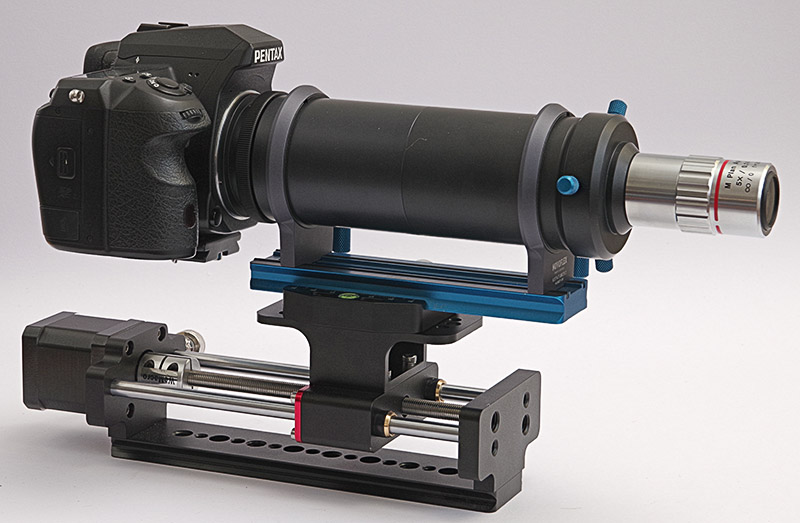
Pentax K-3 with Mitutoyo M Plan Apo 5x mounted on a special tube with integrated tube lens on a Wemacro focusing rail.
This is specialized equipment for macro and micro photography with extended depth of field through focus stacking. The motorized focusing rail with controller automates the creation of extensive image sequences. The optics can come from an ordinary camera bag or from a microscope and other fields.
Affordable focusing rail with stepper motor
The motorized focusing rail from the Chinese manufacturer Wemacro is simply and solidly built. It has a travel range of 100 mm and can be controlled using computers and smartphones. Included in the package are the rail, a power supply unit, a battery holder for mobile use, a controller with the necessary cables, and a cable for triggering the camera.The set costs $259 (January 2020), plus shipping costs and, where applicable, import duties. Import VAT amounts to 19% of the purchase price and shipping costs. Depending on the product classification, an additional customs duty may be charged, ranging from 0 to 17%. I could not find a suitable category in a sample customs list. For reference: analog cameras are subject to a customs duty of 4.2%, digital cameras 0%, and lenses 6.7%. The final price is likely to be between €300 and €350.
That is inexpensive. A comparable set from Cognisys costs around €700, while Novoflex charges nearly €1,800 for the Novoflex Castel Micro. The Wemacro macro rail is every bit as good as the more expensive products.

Canon RP with Canon EF 100mm/2.8 L macro lens on the Wemacro focusing rail
Technical Specifications
Manufacturer: WeMacro
Model: WeMacro automatic focus stacking rail
Price: approx. €300 including shipping (possibly up to €350 due to customs duties and import taxes)
Travel range: 100 mm
Weight: 1.29 kg – rail only!
Camera mount: Arca Swiss clamp
Tripod mount: Arca Swiss profile
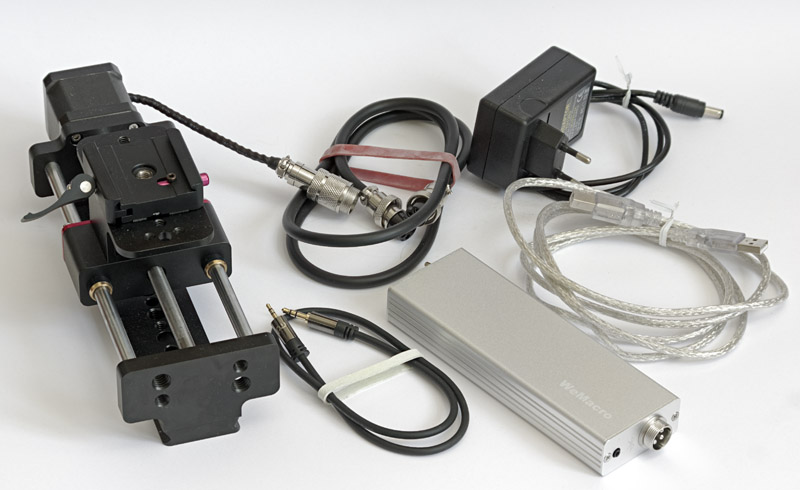
Package contents: focusing rail, power supply, controller with cable, and camera trigger cable. We do not list the simple battery holder because a good power bank with a 12 V DC output is by far the better solution.
The variety of components may seem somewhat chaotic, but with proper organization it is easy to keep track of everything in practice. One should not forget that the camera, optics, possibly a bellows unit, lighting, and holders for small subjects must also be accommodated. It is therefore advisable to create a well-organized workspace with a thoughtful arrangement of cables and equipment.
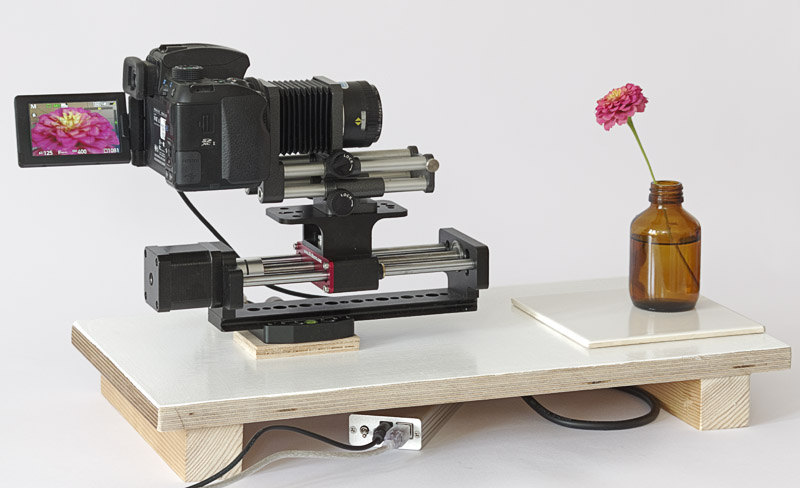
Wemacro focusing rail with Pentax K-70, bellows unit, and Rodenstock lens used to photograph a flower. The shooting table has been slightly raised using two rails to provide space underneath for cables and the controller.
Mounting the Camera
The rail features a slightly raised base plate with several holes for attaching a camera or a quick-release adapter system. Typically, an Arca Swiss clamp is mounted on it. One was even included in the package, but I replaced it with a longer version. To do so, I had to enlarge two holes slightly using a drill.Some photographs in this article show a bellows unit screwed directly to the base plate. This was done to avoid possible instability caused by a quick-release system and to prevent the center of gravity from being raised too much. It was not really necessary because the setup shown is not particularly heavy.
In modern focus stacking, DSLRs with moving mirrors are increasingly being replaced by lightweight mirrorless cameras, which no longer contain mechanical components that may suffer excessive wear from extensive exposure sequences.
Simply mount a good Arca Swiss quick-release clamp on the base plate and everything will work perfectly. To prevent twisting during use, apply a few drops of household adhesive between the base plate and the quick-release clamp before tightening the screws. However, the adhesive should not be so strong that the clamp cannot be removed after loosening the screws. The Mengs CL-90N, with its relatively wide clamping surface, is recommended. It costs just under 20 euros.
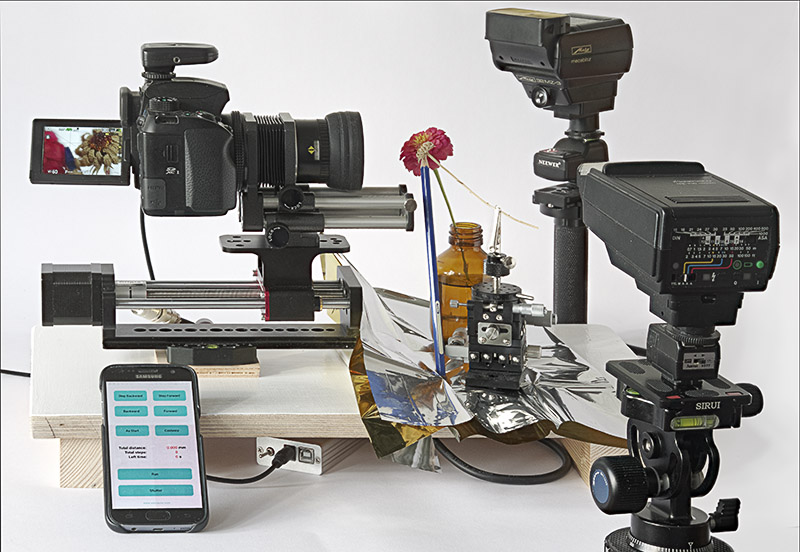
The workspace appears chaotic because of the large number of components arranged in a small area. Flash units ensure short exposure times and reduce blur caused by vibrations. Alternatively, or additionally, LED lamps can be used. Inexpensive models with flexible goosenecks and small lamp heads are available from Ikea, allowing them to be positioned very close to small subjects.
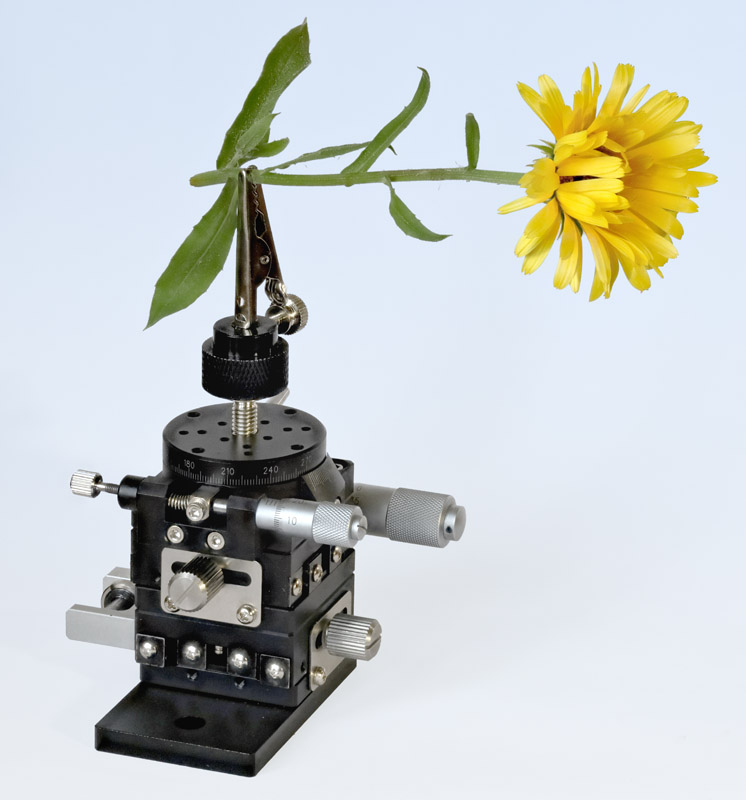
Subject holder with numerous adjustment options. It is especially useful for very small subjects that can only be positioned correctly through minimal, controlled movements. The holder can be mounted on a tripod or base so that it does not shift during handling.
Control via Smartphone or Computer
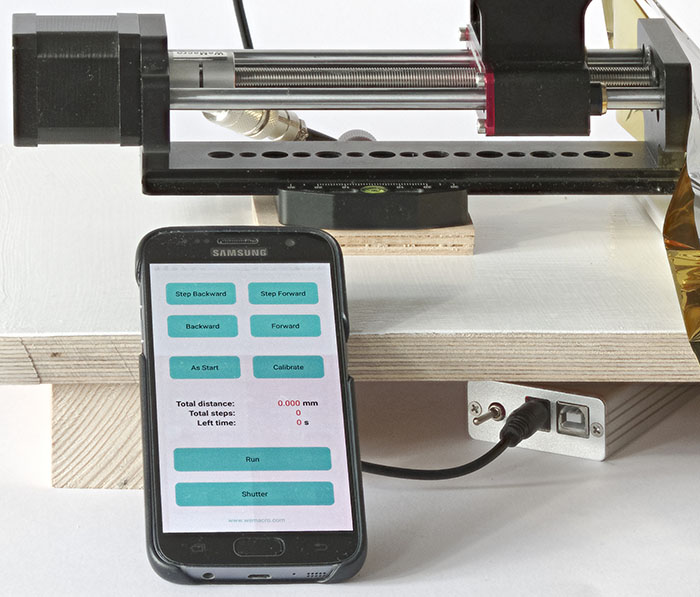
Smartphone used as a remote control. The required app is available free of charge from Google Play. Connection setup is quick. Fortunately, the app remains active even after long waiting periods. Using an older smartphone dedicated to this task is recommended. Both iOS and Android are supported.
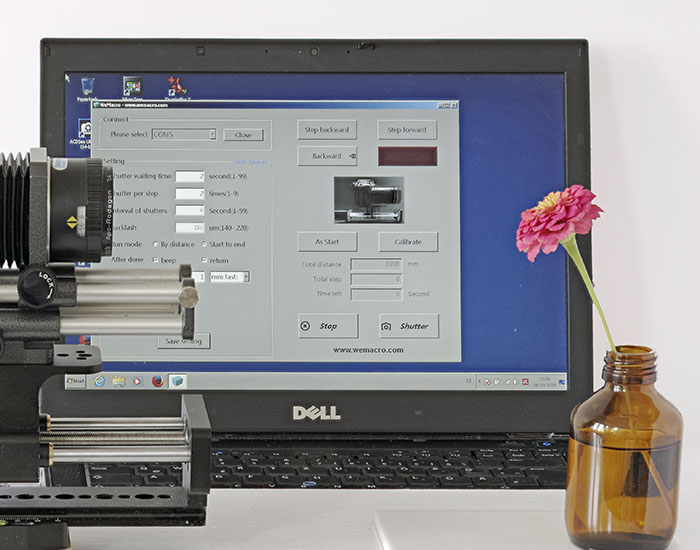
The controller can be connected to a computer. The software can be downloaded from the Wemacro download page. A German-language manual is also available there.
The computer-based control software is perfectly adequate and not significantly different from the smartphone app. However, a computer takes up valuable space in an already crowded workspace and is not practical for outdoor use. Operating the system via smartphone is more convenient and just as reliable.
The app is not complicated either. Its basic operation can be learned through a few attempts within half an hour. Details such as the correct step sizes and the required number of images are best learned through practical experience.
Using the Wemacro Rail in the Field
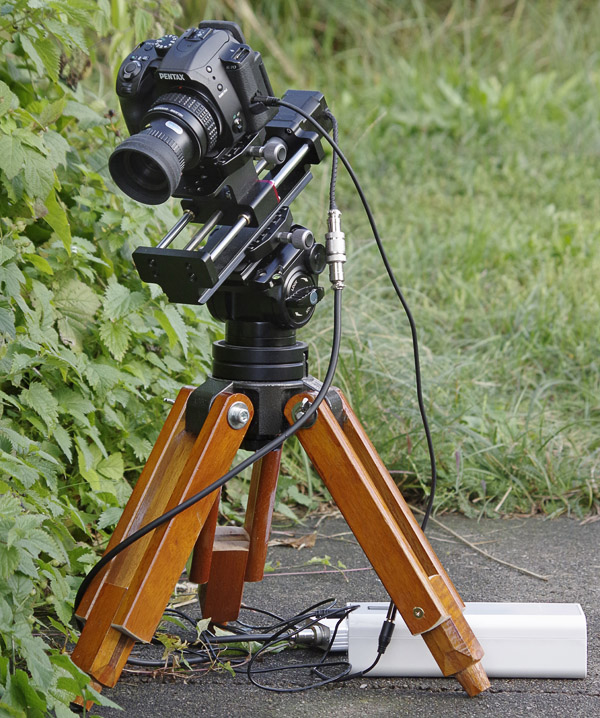
Mobile setup with a small, sturdy tripod and a large power bank. Wemacro Rail mounted on a Sirui VH-10 fluid video head. The Pentax DSLR is equipped with a focusing helicoid and a Rodenstock Rodagon Apo 80 mm lens.
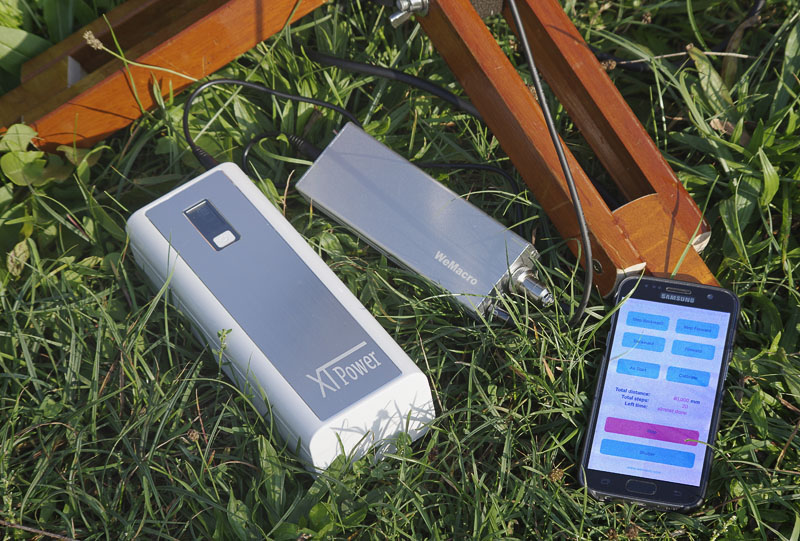
The XTPower / Powerbank MP-50000 DC/USB provides ample battery capacity. The WeMacro Rail is controlled using a smartphone. This setup is already mobile, but because the components are still lying on the ground, it is not yet ideal. In addition, changing locations is not particularly convenient in this configuration.
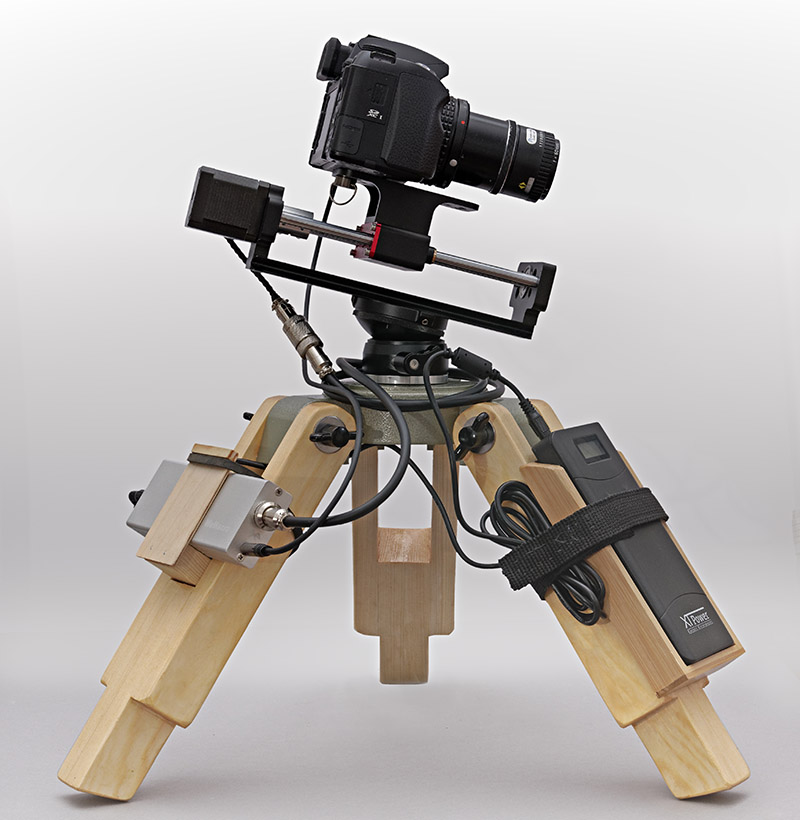
To improve the setup, I built another low-profile tripod. A smaller and lighter power bank was also used. All components could now be attached directly to the tripod, making it easier to relocate the setup and eliminating the need to place electronic equipment on the ground. After all, outdoor surfaces are not always clean or dry. For this purpose, I used the base of another tripod and replaced its legs with very short, self-made wooden legs offering a wide adjustment range, allowing work very close to ground level.
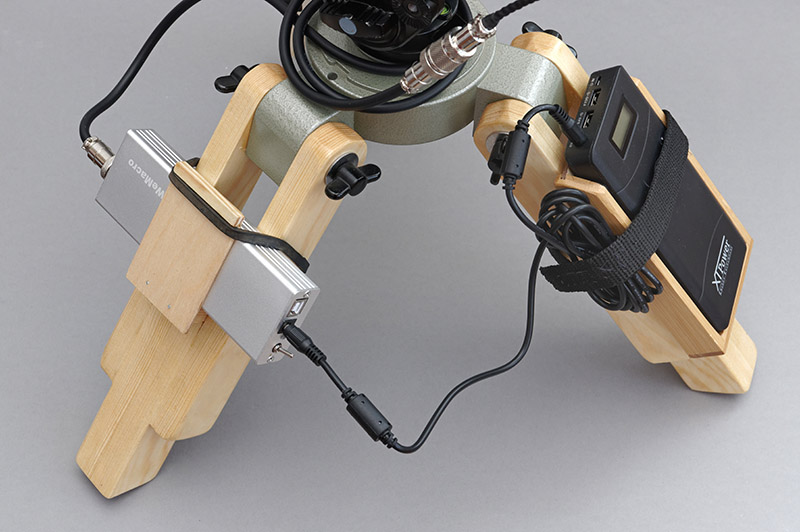
Wooden holders were made for the controller and the 20,000 mAh XTPower power bank.
Secure attachment is achieved using a rubber strap and hook-and-loop fastener. Among other features, the power bank provides a 12 V output for the controller. Overall, this is an excellent solution for operating the Wemacro stacking rail. Considering its load capacity, the tripod is extremely stable and close to perfect. Anyone with basic craftsmanship skills should be able to build a similar setup without much difficulty.
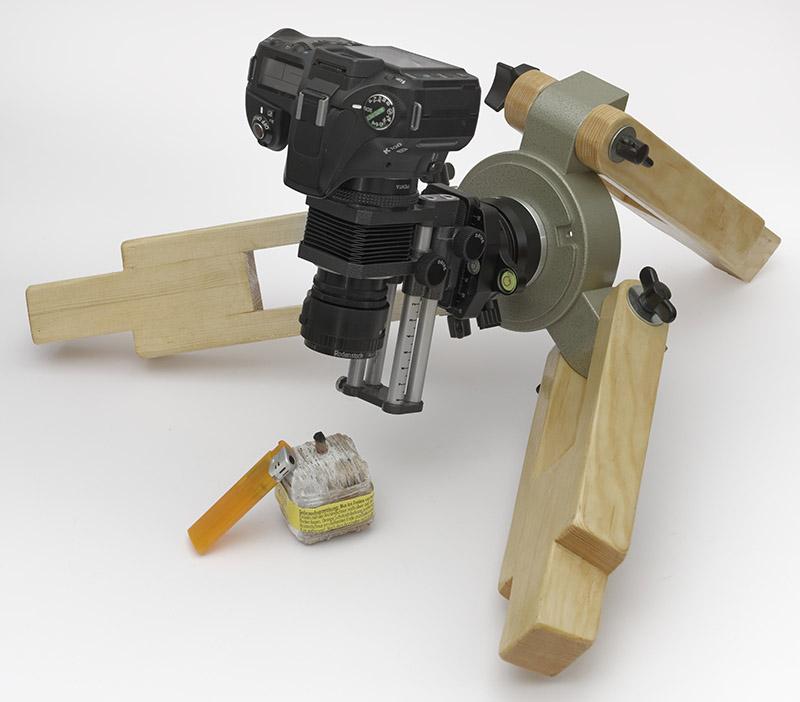
This image demonstrates the tripod's extreme adjustability, although the Wemacro stacking rail is not mounted here. It can, however, be used on the tripod without any problem. Many other unusual positions are possible, allowing operation extremely close to the ground. Incidentally, this small and stable tripod is also well suited for other photographic purposes, such as night-sky photography with a small astro tracker. The low tripod can be placed on a table, a wall, a car roof, or even a large rock.
The Importance of Motorized Focusing Rails in Macro and Micro Photography
More and more digital cameras offer focus stacking and/or focus bracketing. Such cameras automatically create image sequences with slightly different focus settings from frame to frame, allowing all parts of the subject from front to back to be captured sharply across a series of images. Either the camera combines the images into a single photograph with greatly extended depth of field (focus stacking), or it simply provides the images (focus bracketing), which are then stacked on a computer using dedicated software.Modern mirrorless cameras with Micro Four Thirds sensors are particularly capable in this regard. However, this only works with compatible lenses that belong to the manufacturer's standard focal length range and their more recent macro lenses. If you have the required equipment, you can use the camera's built-in focus stacking functions up to a reproduction ratio of 1:1. These functions are not compatible with bellows systems or specialized optics from microscopy.
Whether a separate focusing rail is useful therefore depends on your photographic equipment and the degree of magnification you wish to achieve.
A dragonfly covered with morning dew and resting on a reed stalk is often photographed more effectively—or sometimes only at all—with a camera capable of focus stacking, ideally one that even allows handheld operation.
In such situations, the Wemacro focusing rail would hardly be practical unless all required components were mounted on a tripod that allows suitable positioning outdoors and provides sufficient time for the more elaborate process.
However, if you wish to use specialized close-up lenses, vintage enlarger and reproduction lenses, reverse-mounted optics, or microscope objectives for micro photography, a motorized focusing rail provides an excellent foundation.
In micro photography, the high resolutions of modern image sensors are often not fully utilized for various reasons. Therefore, an older mirrorless camera with 12 to 16 megapixels can still be very useful for focus stacking and extensive image sequences—especially if you prefer not to subject your expensive current camera to the wear and tear of countless exposures.